Charles Engelke's Blog

May 31, 2008

Saturday Morning at RailsConf

Filed under: RailsConf 2008,Uncategorized — Charles Engelke @ 4:26 pm
Tags: ,

The opening keynote was by Jeremy Kemper of 37Signals, who is a leader in developing Rails.  He talked about all the improvements in Rails 2.1, which he announced would be released later today.  If I were already a deep user of Rails, I would have found all the details fascinating and exciting, but I don’t have the context to appreciate all of it.

My first talk of the day is 23 Hacks, by Nathaniel Talbott of Terralien.  He says we need to hack, not just work on practical things.  “Musicians spend a lot of time playing music nobody else would want to listen to.”  To stretch themselves, to learn, for the joy of it.  The same applies to software development; there is value in “valueless” software.  He then demonstrated 13 hacks, and asked the audience to suggest 10 others to make 23.  An inspiring talk, ending with an exhortation to us to go hack something soon.

My second talk is Advanced Restful Rails by Ben Scofield of Viget Labs.  He started the talk by praising the value of constraints, referencing poetry and classical music.  Constraints free you to focus on the smaller set of unconstrained options, letting you be creative and productive.  He then covered the material well, but I didn’t learn much new because I’ve been reading so much on this topic already.

The Conference T-Shirt Economic Index

Filed under: RailsConf 2008 — Charles Engelke @ 3:04 pm
Tags: ,

The economy as a whole might be slow, but the Ruby on Rails sector of the tech economy seems to be on fire.  One measure is how much money vendors spend on t-shirts at conference like this one.

Back in the late 90s, I remember a relatively small O’Reilly Perl conference where about two dozen different vendors were handing out t-shirts with abandon (Sun was giving handsful of OpenOffice shirts to each person, instead of one shirt at a time).  The next year, after the tech bubble burst, not a single free t-shirt.

This year at RailsConf, t-shirts are back.  I think there are six vendors giving away shirts, and most of them are pushing them on anyone who even walks near their display, even if they already have a shirt in their hand.

Consider this a leading economic indicator

First day at RailsConf

Filed under: RailsConf 2008 — Charles Engelke @ 12:48 am
Tags: ,

Today was my first day at RailsConf in Portland.

We started the day with a keynote from Joel Spolsky.  He gave a very entertaining talk, with good visuals and a lot of jokes.  The theme was on what makes software good, with a lot of analogies to architecture, fashion, and even sociology.  He’s written about all of this before, in bits and pieces.

My first two breakout sessions weren’t a great start to the conference.  John Lam gave a talk on the IronRuby project, where Microsoft is porting Ruby to run on .Net and in Silverlight.  The topic was very interesting, but the talk didn’t give any background, and was full of acronyms and jargon specific to either Microsoft or the IronRuby project, and he never defined any of.  The second session I attended was “10 Things I Hate About Web Apps” by Micah Martin, which was billed as being about a new open source client-side tool that would eliminate all those bad attributes of web apps.  Well, the tool is Limelight, and it eliminates web app problems by not being a web app.  It’s a new client that runs on JRuby (Ruby on the Java virtual machine), and is conceptually similar to Flash or Silverlight.  I’m more interested in standards-based web applications for now.

Things picked up for me after lunch (which was a real break, unlike at Google IO, with decent food and a good job managing serving and seating so many people).  First, I deliberately attended a session that was effectively an infomercial for a conference sponsor’s product.  I was skeptical about this track, but the talks were clearly and honestly labeled, and this one was interesting.  Guy Naor of Morph Labs showed off Morph Appspace, a free Rails hosting environment with good deployment tools.  It was all hands on and live; there were a few glitches due to typos and such, but everything worked and worked well.  I’ll probably give the product a try.  And I think it’s cute that they registered their domain in the Philippines to spell “Mor.ph”.

I closed the day by attending two sessions each absolutely jam-packed with people.  Neal Ford of ThoughtWorks talked about Design Patterns, and how a lot of the existing way of looking at them is obsoleted by languages like Ruby.  His slides are available for download.  And Ryan Singer, a web designer at 37 Signals, gave a great talk on how designers and programmers can work as a team, instead of effectively having a wall separating them.  His perspective as a designer, instead of a programmer (like most of the attendees) gave us all a fresh look at things, and the audience really responded to him and his talk.

So, even though the first few sessions seemed a bit weak to me, the conference as a whole is shaping up to be quite worthwhile.

May 29, 2008

Today at Google IO

Filed under: Google IO 2008,Uncategorized — Charles Engelke @ 5:17 pm
Tags: , , ,

…is going better for me than yesterday.  Sessions are mostly running a bit short, so it’s not nearly as frantic running from room to room.  I even had time to eat a sandwich, and as a result had a nice chat with another attendee.  It turned out she grew up in Gainesville, where I lived and still work.  And she’s working on technology very relevant to what our applications need, and is going to send me some information on new functionality as soon as it’s announced.

That kind of ad hoc meeting is something I like about conferences, and Google IO’s ultra-tight schedule with no break for lunch gets in the way.  I hope they change it next year.

Keynote, Day 2

Filed under: Google IO 2008,Uncategorized — Charles Engelke @ 5:12 pm
Tags: , , ,

Today started with a talk by Marissa Mayer, Google VP of Search and User Experience.  It was again very well done, and she’s an engaging speaker.

We heard some interesting things about how Google designs their pages.  For instance, they added the copyright notice at the bottom of the page not for legal reasons, but because in early user tests people kept waiting after the page was displayed before they’d enter a query.  Why?  They were waiting for the “rest of it”; the page couldn’t be loaded, it was too sparse.  So the copyright notice was added “as punctuation” to signal folks that the page was loaded and ready.

They do a lot of A/B (or A/B/C…) testing, where different users get slightly different pages from Google, and Google gathers and analyzes data about user behavior as a result.  They often find that very tiny changes changes can have a big effect.  The amount of white space between the Google logo and the separator bar on a results page?  The small amount they use results in greater user satisfaction and more Google searches than larger gaps.  Text ads with yellow backgrounds instead of blue?  Measurably better results.

What I took away from this was that you should listen to, or observe, what your users do, not what they say.  Mayer referenced a Henry Ford quote I hadn’t heard before:

“If I had asked people what they wanted, they would have said faster horses.”

After Hours at Google IO

Filed under: Google IO 2008,Uncategorized — Charles Engelke @ 1:33 am
Tags: , , ,

This evening Google had a reception with lots of food and drink, and music by Flight of the Conchords.

State of Ajax

Filed under: Google IO 2008,Uncategorized — Charles Engelke @ 1:27 am
Tags: , , ,

Dion Almaer and Ben Galbraith of Ajaxian told us about Ajax tools and frameworks, and the direction they see Ajax going.  Their talk was really well done, and very interesting.  Google taped all the talks and said they will post them sometime, probably on code.google.com, so you’ll be able to see for yourselves.

Highlights I took down:

There are lots of Ajax frameworks and toolkits, which were created to do different kinds of things. But over time, the leaders all evolved to cover similar broad spectra of functionality. The four families that really matter now are Prototype, Dojo, jQuery, and GWT. (I wonder if including GWT is partly just an acknowledgment of the conference sponsor.)

Future directions are to make the browser as capable as your PC, and will eventually be strong competition for native GUI applications. Tools for that include Fluid (which I hadn’t heard of), Adobe Air, Mozilla Prism, and Google Gears.

Google IOKO

Filed under: Google IO 2008,Uncategorized — Charles Engelke @ 1:07 am
Tags: , , ,

Google’s logo for Google IO is the binary values of ASCII IO, with white circles for 1 and black circles for 0. Their slides do the same thing, but with large and small circles:

The t-shirts they’ve given us use the same coding to spell out Google IO. Except they spell Google KO instead:

Their own t-shirts say the same thing, but in black on white instead of white on black.

A mistake? Or a threat to potential competitors?

May 28, 2008

Keynote talk

Filed under: Google IO 2008,Uncategorized — Charles Engelke @ 7:59 pm
Tags: , , ,

This morning’s keynote for Google IO was the just about the best talk of that kind I’ve ever attended.  It was a broad overview of the topics from Vic Gundotra, a Google Vice President of Engineering, with several short talks on specific topics by relevant staff members.  It was full of useful information and whetted my appetite for the upcoming breakout sessions, and the speakers were all very polished and clearly rehearsed.

Some highlighted topics:

  • Google Javascript APIs.  Google has really opened its services up, and provides easy to use RESTful libraries for getting them to them in Javascript.  I’m not real interested right now in any single one of them, but the breadth of what’s available now is impressive.
  • Android.  Some very nice demos of mobile phones running Android, but I’m not clear on when this technology will actually be available for people like me to use.  I want it, but I bet today’s cellular provides, who always want to lock their users down, probably don’t want it.
  • AppEngine.  This is the technology that triggered my decision to attend the conference.  I’ve done some development in it, like it, and see great uses for it.  The big news for AppEngine is that it is now (as of today) open for anyone to sign up to use.  They also showed some approximate pricing for when it becomes a fully supported product, but committed to making it always free for low volume users.  “Low volume” will be defined in terms of storage, CPU, data transfers, and so on, but the free level will be enough to cover an average of 5 million page views per month.
  • OpenSocial.  Google’s supporting open APIs for social networking in a big way.  Personally, I’m not currently very interested in it.
  • Google Web Toolkit.  In addition to the native Javascript APIs, Google supports client-side development with GWT.  You write the applications in Java, and GWT compiles it to Javascript for deployment to the browser.  I don’t get it.  The speaker made a big deal of how Java was a much better language for this, and had grown-up development tools, but didn’t convince me.  I remember vendors pushing Cobol for developing in OS/2 and Windows for the same kinds of reasons.  Have you seen a lot of Cobol GUI programs?
  • Google Gears.  Now just called Gears.  This is a browser plug-in that lets you do all sorts of great things with Ajax, like store persistent data on the client and access client resources.  They are looking at this as a bleeding edge early preview of HTML 5, and I think it’s going to be important.

That’s not exhaustive, but it’s fairly complete.  I’m glad I came.

Google doesn’t scale

Filed under: Google IO 2008,Uncategorized — Charles Engelke @ 3:37 pm
Tags: , , ,

That is, the Google IO conference starting today in San Francisco isn’t scaling very well.  Registration was very, very slow for some reason, even though all that seemed to be happening was finding preprinted badges and giving them to attendees.  They simply couldn’t get people registered in the 90 minutes from when they opened at 8:00 until the keynote at 9:30, so they decided to let people attend sessions most of today without badges.  People need to go to the desks between sessions and get their badges by the end of the day.

Agenda scheduling doesn’t seem very practical.  Sessions go on non-stop all day with 15 minute gaps between them.  People are supposed to grab food during those breaks, but the food’s on a separate floor, and with such large crowds I don’t think you can even get to the other floor and back in that time.  The other choice would be to skip a session to eat, but the agenda is very strong.  I’m glad I ate a big breakfast.

The conference content has been great so far, with the most polished yet technical talks I’ve ever seen.  I hope that keeps up for the whole time.  Notes on sessions later as I get some breaks.  I’m not going to write during the sessions themselves.

May 20, 2008

The Coolest Urinal

Filed under: Vacation 2008 — Charles Engelke @ 1:11 pm

At least, the coolest one I’ve ever seen:

Cool CPH Hilton Urinal

It’s a black marble fountain, or waterfall, that starts flowing when you walk up to it.  I don’t know why I like it so much, but I do.  It’s in the public men’s room of the Copenhagen Airport Hilton.

Finding a neat urinal wasn’t the main highlight of the day, though.  Laurie found the great yarn shop she visited a few years ago:

Copenhagen Yarn Shop

She bought a lot of unusual and special yarns.  The cashmere/silk blend is really luxurious feeling.  We couldn’t remember exactly where the shop was, so I took a picture of the opposite corner to remind us if we get back to Copenhagen:

Yarn Shop Corner

The corner of Krystalgade and Fiolstræde, not far from the Nørreport train and metro stations.

May 2, 2008

Thanks, Amazon!

Filed under: Uncategorized — Charles Engelke @ 3:41 pm

I ordered a book from Amazon before it was released, and got it as soon as possible. But the price of the book dropped before release. Was I to be punished for ordering too early?

Nah:

Hello from Amazon.com.

We’re writing to confirm that we have processed your refund for USD
0.01 for the above-referenced order.

For more information on how we calculate refunds, please visit our
web site at http://www.amazon.com/refunds

We hope this is a satisfactory resolution for you. However, if you
have any questions or concerns, please use this link to contact
Customer Service:

http://www.amazon.com/gp/help/contact-us/returns-and-refunds.html

Thank you for shopping at Amazon.com.

Note that this was the second e-mail Amazon sent me keeping me informed of the progress of my vital refund.

April 30, 2008

Outsourcing My Servers

Filed under: Notes — Charles Engelke @ 10:26 pm

I registered engelke.com in 1998, and have been running all my own infrastructure for it since then. It was a good learning experience to set up my own servers and provide DNS, web and e-mail, but I no longer feel like dealing with all that. And thanks to all the services now available I no longer have to. I just completed moving most of my domain’s infrastructure to free hosted services. I migrated my wife’s domain (lauriewhite.org) at the same time.

First up was DNS. Registrars now host name services for domains registered with them, and have pretty easy web interfaces to configure them. My domain is at Network Solutions, and it took no time at all to change my registration to point to their servers instead of mine, and to configure all the entries. Laurie’s domain
was registered with Nameboy, and their DNS control panel wasn’t as easy to use, but it still didn’t take much work.

Next, e-mail. This was my main motivation for the changeover. I was tired of worrying that my servers would crash when both of us were out of town, causing e-mail to be lost. Google Apps to the rescue. I registered each domain with them for free, and set them to handle all the e-mail for the domains. I then went back to the DNS servers and changed the MX (mail exchange) records according to the directions on Google Apps. I kept my old servers running for a few days, but in almost no time e-mail stopped being delivered to them and went to the Google accounts.

The only dynamic content on the sites was our blogs. They were run on Movable Type, and could be exported to a text file for loading on another host. My first thought was to host them on TypePad, which is owned by Movable Type and runs on essentially the same software. That would have been easy and free, but the blogs wouldn’t show up as being on our domains. Not a huge problem, and it could be solved by upgrading to a paid account for $90 per year (total for both blogs).

But I’d heard a lot about WordPress; mostly raves, and comments about how easy it was to migrated a blog over from Movable Type. And it was free to host, after which I could pay $10 per year per blog to have them showing as being on our own domains. Since it was free, I gave it a try. It loaded my exported blog perfectly, but the post addresses were different, as were the image addresses. So I edited the exported file, deleted the entries, and re-imported them. It looked perfect, so I paid the $10 to host it at blog.engelke.com (requiring another trip to the DNS control panel to point that address at the right place), and then did the same for Laurie’s blog.

The moves are all done, and I’m pleased with the results, and the fact that the whole thing only costs $20 per year. I’m also not locked in to any provider. I can move any component to any other host pretty easily; certainly as easily as this move from my own infrastructure.

We’re not totally off our own infrastructure. We each have regular web sites at engelke.com and lauriewhite.org. I’m looking at migrating them to other hosts (perhaps Amazon’s S3) but right now I’m using Apache and rewrite rules to redirect requests to the old blog address to the new ones. I’ll move the web sites sooner or later, but I’ll keep running my own web server for experiments and short-term solutions anyway. They just won’t be critical, so I don’t have to worry about them crashing.

March 7, 2008

Internet Calendar Tools

Filed under: Gadgets — Charles Engelke @ 8:08 pm

Google Calendar Sync

I use Outlook to manage my calendar on my PC, and sync it with my Palm PDA. I like Google Calendar for sharing my calendar information with others, but I couldn’t keep it in sync with the other calendars I have.

Well, now I can. Google just release a free Outlook Calendar Sync program. I’ve installed it, and it works fine. Now all my appointments are in three different places, but they all agree with one another.

TripIt

I don’t travel as much on business as I used to, but this free service is still really useful for me. Whenever I got an e-mail confirmation for a travel reservation—flight, hotel, rental car—I just forward a copy to plans@tripit.com. That site parses the messages and keeps a calendar of all my travel information. It even groups reservations for the same trip together automatically.

There’s nothing to sign up for, or to pay. Just forward a reservation and wait a minute for a reply. The first time you do it, you’ll get a link in the response that you can follow to set up a password for your itineraries. From that point on, just keep forwarding the messages, and then go to tripit.com to view your itineraries.

You can use an iCal feed from TripIt to update Outlook or your Google Calendar. You can even share the feed with others, so they can see your whole travel schedule.

One downside is that you’re giving TripIt enough information about your reservations for them to change some of them, if they wanted to. But the related benefit is that TripIt can actually check with the airline and update your flight times when they change, with no input from you.

November 7, 2007

Windows Live Writer Test

Filed under: Personal — Charles Engelke @ 5:40 pm

All I want to see is, will this tool actually publish to my own blog?

November 2, 2007

Vista, again

Filed under: Vista — Charles Engelke @ 6:48 pm

Earlier this year, I gave Vista a try. After less than two weeks, I gave up in frustration and went back to Windows XP. So why, when I bought my own new ThinkPad six weeks ago, did I order it with Vista Ultimate? Well, I wanted to give it another chance. And I wanted some of the features it has. And it’s certainly worked out much better this time. It’s taken me six weeks instead of only two to give up on it and go back to XP!

Actually, I haven’t yet totally given up on Vista. I’ve bought a new hard drive to put Windows XP on, and I may move back to the Vista disk after Microsoft finally releases a service pack for it. But I’m not very hopeful. Vista doesn’t really offer much in the way of useful new functionality, and it takes too much away in performance and stability. I’ve probably had to reboot my PC at least once a day, and each reboot takes forever. In fact, pretty much everything I do in Vista takes forever.

In a nutshell, here are the pluses and minuses of this trial of Vista:

(more…)

October 16, 2007

Another Spam Milestone

Filed under: Notes — Charles Engelke @ 1:49 pm

Eight months ago, I posted a note about spam on my GMail account hitting 10,000 messages in 30 days. Well, that was nothing:

gmailspam.jpg

That’s not only more than four times worse, it has now exceeded an average of more than one spam message per minute over the last 30 days!

July 25, 2007

More vacation photos

Filed under: Vacation 2007 — Charles Engelke @ 10:49 pm

I didn’t have time to post pictures during part of the trip, so here are a few more rounding out our trip.

(more…)

July 14, 2007

Arriving in Paris

Filed under: Vacation 2007 — Charles Engelke @ 8:53 pm

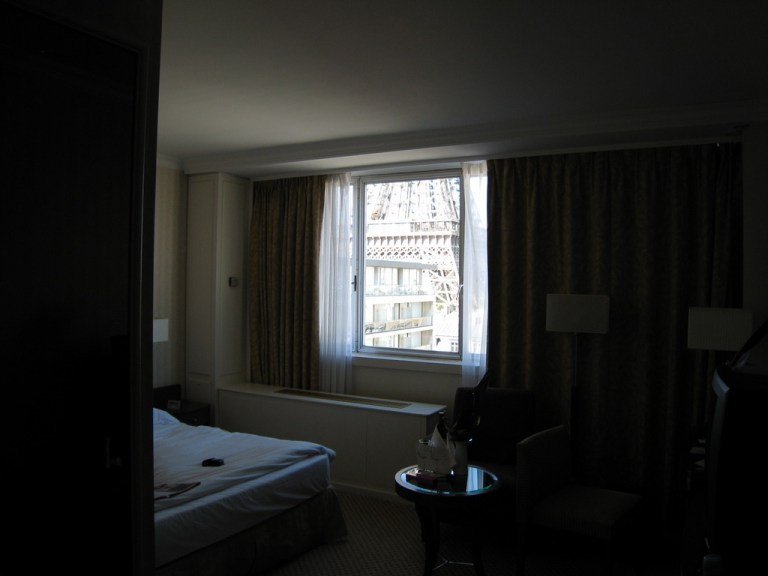
We got into Paris this afternoon, and really hit the jackpot. Here’s our room from the door.

Room.JPG

What’s that stuff in the window? Oh…

(more…)

July 6, 2007

Tallinn, St. Petersburg, and Helsinki

Filed under: Vacation 2007 — Charles Engelke @ 12:22 pm

I haven’t had Internet connectivity for a few days, so this post catches up on three cities.

(more…)

« Previous PageNext Page »

Create a free website or blog at WordPress.com.